
 Bookmaker Reviews
 Casino
 Games
 Promotions
 Rewards
 Slots

A player opens a mobile game and discovers a new membership badge, a higher points balance and access to a seasonal reward. None of these changes necessarily involves a cash payment. They may simply reflect progress within the game’s membership system.
A loyalty program rewards eligible users for defined activities or continued participation. Depending on the platform, benefits can include virtual currency, cosmetic items, early access or membership privileges.
However, not every points balance represents something that can be exchanged freely. Expiration dates, eligibility requirements and redemption limits often determine its practical value.
This Hobigamesgo guide explains how gaming membership systems work, how points and tiers differ, and what readers should check before interpreting promotional reward claims.
⭐ Loyalty Program – How Points and Membership Tiers Work
Membership systems are designed to recognize certain activities over time. Their structure can be simple, with one points balance, or more elaborate, with several membership levels.
What Is a Gaming Loyalty Program?
A gaming loyalty program is a structured rewards system connected to an account.
A player might receive points for completing eligible activities, joining seasonal events or reaching stated milestones.
The publisher determines which actions qualify and how rewards are distributed.
Some games use participation-based points, while other services connect their programs to purchases. These are different models and should not be confused.
The clearest explanation identifies how users earn rewards, whether the system is free to join and what restrictions affect its benefits.
How Are Loyalty Points Earned?
Loyalty points represent units recorded under a platform’s reward rules.
For example, a fictional mobile game might award ten points for completing a daily challenge and fifty points for reaching a weekly milestone.
A player completing five eligible daily challenges would receive:
5 challenges × 10 points = 50 points
The example illustrates accumulation rather than a real promotional scheme.
A points balance may be displayed in a player’s profile, but its existence does not establish any cash value.
The publisher’s redemption rules determine what those points can actually provide.
Understanding Bronze, Silver and Gold Tiers
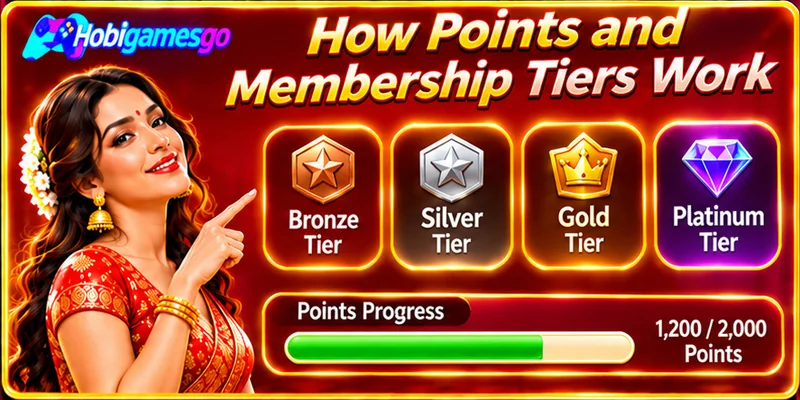
Many membership systems divide participants into levels such as Bronze, Silver and Gold.
Higher VIP tiers may offer additional features, earlier access to content or an expanded selection of virtual rewards.
Consider this fictional structure:
| Membership tier | Points threshold | Illustrative benefit |
| Bronze | 0 | Standard member profile |
| Silver | 500 | Additional avatar customization |
| Gold | 1,500 | Access to an exclusive cosmetic catalog |
| Platinum | 3,000 | Priority access to selected events |
These thresholds and benefits are examples, not published offers from any real platform.
A loyalty program may also reset its progress each season, making the qualification period as important as the tier itself.
Points Balance vs. Membership Status
Points and membership status are not necessarily interchangeable.
A user may spend accumulated points without losing their current tier. Another system might calculate membership status from points earned within a fixed period.
Some programs use separate counters for available rewards and lifetime participation.
Readers should therefore distinguish redeemable points, qualifying points and membership level when examining a gaming reward system.
⭐ Loyalty Rewards – Redemption, Value and Restrictions
Earning points is only the first part of a rewards arrangement. Its usefulness depends on what users can obtain and whether those benefits remain available.
What Can Loyalty Rewards Include?
Loyalty rewards vary considerably between game publishers.
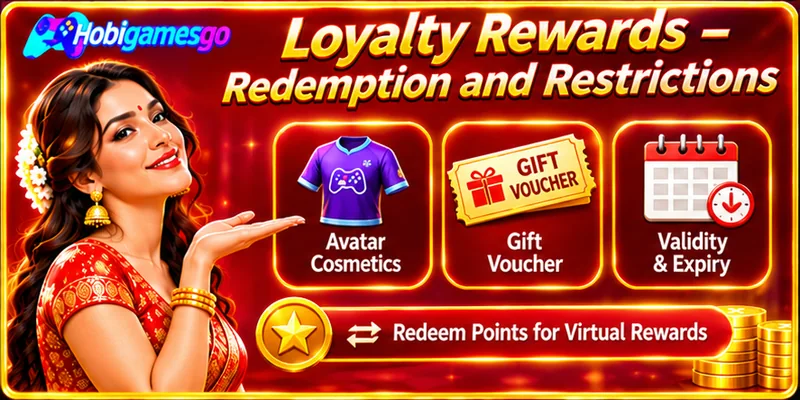
Common examples include decorative avatar items, profile badges, event tokens, additional customization options and access to community features.
Certain systems also distribute discount vouchers or other promotional benefits.
The important question is whether the reward has a clearly defined purpose.
A cosmetic item may improve personalization without affecting gameplay. A virtual token may have value only within a particular game’s economy.
These differences matter when comparing loyalty program benefits across platforms.
How Does Reward Redemption Work?
Reward redemption is the process of exchanging eligible points for an available benefit under published rules.
Imagine a fictional store offering a decorative avatar frame for 250 points.
A player with 600 points could redeem one frame and retain 350 points, assuming no additional restrictions.
The arithmetic is simple:
600 − 250 = 350 points remaining
However, some items are limited to one redemption per account. Others require a minimum membership tier or become unavailable after a seasonal event.
A useful reward description should make these limitations visible before redemption.
When Do Loyalty Points Expire?
Not all programs allow points to accumulate indefinitely.
Some use fixed expiration dates. Others remove unused balances after prolonged inactivity or reset points when a season ends.
For instance, points earned during a three-month campaign may become unusable when the next campaign begins.
Users should check whether an expiration date applies to each points allocation or to the entire account balance.
The same applies to tier renewal. Membership privileges may depend on maintaining activity within a qualification period.
Are Gaming Rewards the Same as Money?
Virtual rewards should not automatically be treated as cash equivalents.
A badge, skin or in-game credit may be restricted to a particular product and have no official redemption value outside it.
Some promotional websites use monetary language to describe rewards that are actually nontransferable virtual items.
A transparent loyalty program identifies the nature of each benefit rather than suggesting every point can generate financial earnings.
This distinction is especially important when evaluating advertisements aimed at mobile gamers.
⭐ Evaluating a Loyalty Program and Avoiding Misleading Claims
The quality of a rewards system depends on understandable rules, not simply the number of membership tiers or the attractiveness of its promotional graphics.
Check Eligibility and Tier Conditions
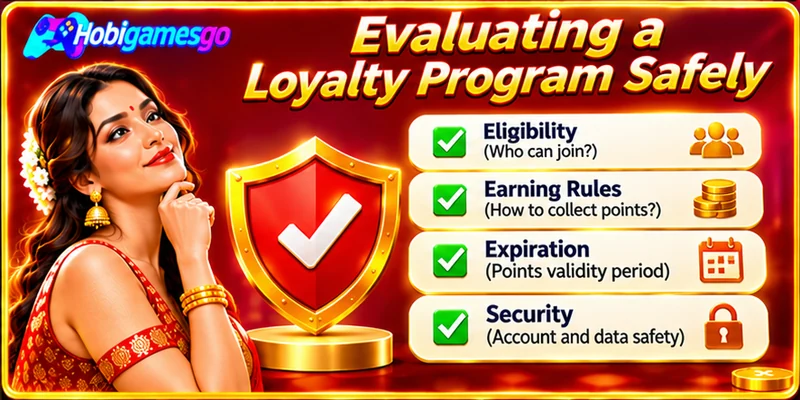
Before drawing conclusions about a program, readers should identify which activities qualify, whether rewards are available in their region and whether a purchase is required.
A higher tier may appear attractive but provide benefits that are irrelevant to a particular player.
Similarly, an exclusive item may be available only for a short time.
A well-documented loyalty program should distinguish guaranteed membership privileges from occasional promotional offers.
Common Warning Signs in Reward Promotions
Watch for unclear publisher information, claims that virtual points guarantee income and pressure to make unexpected payments.
Requests for passwords, one-time verification codes or account recovery details are particularly concerning.
Websites promising unlimited points through unofficial software may also expose users to modified applications or credential theft.
Rewards should be assessed using official publisher documentation rather than claims from anonymous social media accounts.
Practical Membership Evaluation Checklist
| Review factor | What to examine |
| Enrollment | Is membership automatic or optional? |
| Points earning | Which activities qualify? |
| Tier thresholds | How are levels calculated? |
| Redemption | What can points be exchanged for? |
| Expiration | When do points or privileges end? |
| Restrictions | Are rewards transferable or limited? |
| Account security | Can the publisher be verified? |
This checklist helps readers evaluate membership benefits without assuming that the highest tier is necessarily the most useful.
Loyalty Systems and Gaming in India
India’s online gaming framework distinguishes permitted social games and e-sports from prohibited online money games.
A virtual reward system in a lawful social game should not automatically be equated with a financial incentive attached to an online gambling service.
An overseas platform’s membership advertisement does not establish that its money-gaming activities are authorized for Indian users.
Hobigamesgo approaches loyalty program terminology through education, consumer awareness and the mechanics of digital rewards.
⭐ Frequently Asked Questions About Loyalty Programs
What is a loyalty program in gaming?
A loyalty program is a system that grants eligible members points, privileges or rewards under defined participation rules.
Are loyalty points worth real money?
Not necessarily. Many games use virtual points that cannot be exchanged for cash.
Do higher membership tiers always offer better rewards?
Higher tiers may provide additional benefits, but their usefulness depends on the actual rewards and qualification conditions.
Can loyalty points expire?
Yes. Expiration, inactivity and seasonal reset rules vary between programs.
Is a loyalty program the same as a welcome bonus?
No. Welcome offers generally focus on introductory eligibility, while loyalty systems recognize qualifying activity or membership progress over time.
⭐ Conclusion
A loyalty program can add structure to digital gaming by connecting eligible activities with points, membership levels and defined rewards.
Its real usefulness depends on transparent earning rules, practical redemption options and understandable restrictions.
Through Hobigamesgo, readers can explore gaming membership systems without confusing virtual achievements with guaranteed financial benefits or relying on exaggerated promotional claims.
