
 Bookmaker Reviews
 Casino
 Games
 Promotions
 Rewards
 Slots
A convincing sportsbook website does not necessarily belong to a trustworthy operator. Modern website templates can reproduce professional graphics, familiar sporting imagery and realistic account dashboards within minutes. Unfortunately, the same technology can also make deceptive platforms appear legitimate.
Recognizing bookmaker red flags requires looking beyond design. Missing ownership details, misleading licensing claims, suspicious payment demands and inconsistent terms can reveal problems that promotional banners deliberately overlook.
At Hobigamesgo, this guide examines the most important sportsbook warning signs, explains why they matter and provides a practical framework for evaluating unfamiliar websites. The objective is to help readers identify risks before sharing sensitive information.
⭐ Bookmaker Red Flags Hidden Behind Professional Websites
Visual credibility is one of the easiest signals to imitate. A polished homepage may create confidence, but reliable operator information requires evidence that can be checked independently.
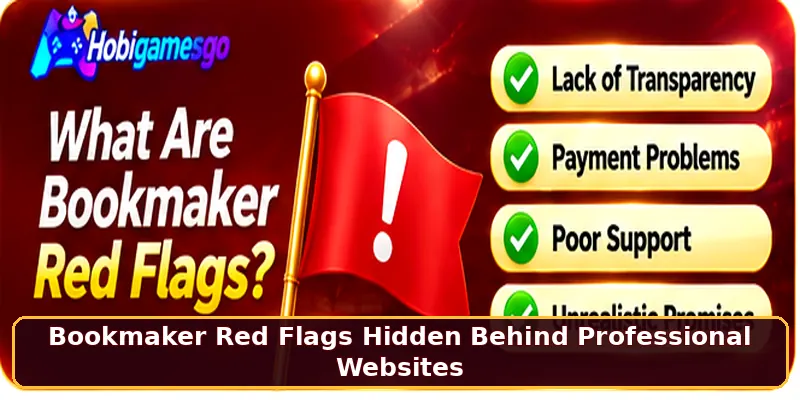
Missing or Inconsistent Company Information
One of the clearest bookmaker red flags is the absence of an identifiable operating company.
A legitimate business should explain which legal entity is responsible for its services. Relevant information may include the company’s registered name, jurisdiction, contact details and contractual terms.
A trading brand is not necessarily the same as the registered business. However, inconsistencies between the two should be explained rather than ignored.
When a website displays several conflicting company names across its privacy policy, footer and account terms, the discrepancy deserves investigation.
Suspicious betting websites may also provide only an anonymous contact form, with no meaningful information about the organization behind the service.
Fake Licensing Badges and Regulatory Claims
Regulatory logos can be copied just as easily as brand graphics.
A website may display the name of a gambling authority without providing an authorization number or identifying the licensed operator.
This does not establish that the license is genuine.
How to Examine a License Claim
Start by finding the official register maintained by the named regulator.
Compare the operating company, authorization status, activities covered and associated websites where that information is available.
A license issued to an unrelated company is not evidence that the website being examined is authorized.
Bookmaker verification should rely on official records rather than screenshots supplied by the operator itself.
Another important distinction concerns geography. A foreign gambling license does not automatically permit a company to offer real-money betting in India or elsewhere.
Imitation Domains and Copied Brand Identity
Fake betting sites frequently imitate recognizable names through subtle spelling changes, added hyphens or different domain extensions.
Some reproduce logos, promotional graphics and navigation menus from other websites.
This type of imitation can be difficult to recognize when a user arrives through a message, advertisement or shortened URL.
Check the full domain carefully and compare ownership details against independently verified sources.
An HTTPS connection alone does not prove that a website is authentic. It indicates an encrypted connection, not the legitimacy of the business receiving information.
⭐ Financial and Security Bookmaker Red Flags to Recognize
The most serious risks often appear when a website requests account credentials, identification documents or money. These interactions require stronger scrutiny than ordinary promotional claims.
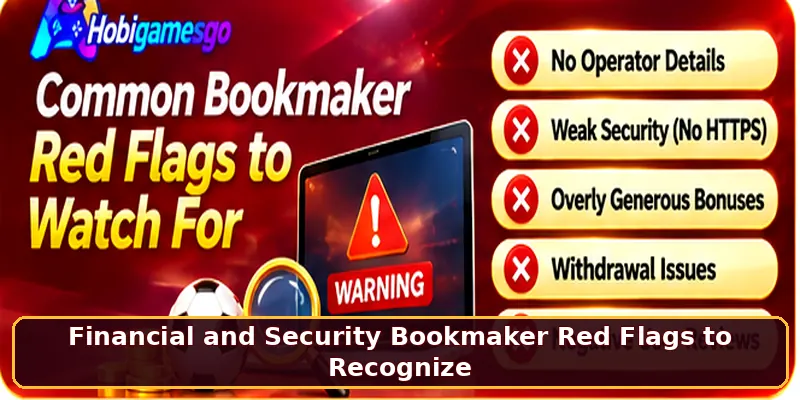
Unexplained Payments and Withdrawal Demands
Unexpected financial requests are among the most consequential bookmaker red flags.
A website may advertise straightforward withdrawals but later demand an additional transfer described as a release fee, account-unlocking charge or mandatory tax payment to an unrelated account.
Published fees and verification procedures should be understandable before any financial interaction.
A demand to send more money simply to access an existing balance warrants immediate caution.
Legitimate tax obligations, where applicable, should be distinguished from unexplained transfers requested through unofficial channels.
A useful review should report exactly what the operator’s terms say rather than promise that every transaction is instant or unrestricted.
Unrealistic Bonuses and Guaranteed Returns
Promotional messages can also reveal sportsbook warning signs.
Claims of guaranteed winnings, risk-free profits or consistently predictable results conflict with the uncertainty inherent in sporting events.
A bonus advertised with an unusually large figure may carry restrictions that are difficult to locate.
Even where a promotion is genuine, its eligibility rules, expiration period and withdrawal conditions determine what the offer actually provides.
Bookmaker scams sometimes use exaggerated rewards to create urgency and persuade users to disclose personal information.
A credible analysis should distinguish a misleading advertisement from confirmed fraudulent conduct, which requires stronger evidence.
Suspicious APK Downloads and Login Requests
Mobile applications can introduce risks beyond those associated with websites.
An unofficial APK may imitate an established sportsbook while requesting excessive permissions or collecting login credentials.
Warning signs include demands to disable device protections, unexplained access to messages or contacts, and installation links received from unknown senders.
Bookmaker red flags also appear in messages requesting passwords, one-time verification codes or remote control of a user’s device.
No customer-support representative should need a user’s password or authentication code to explain account conditions.
If a website or application makes such requests, users should stop sharing information and verify the communication through a trusted independent channel.
⭐ How to Investigate Bookmaker Red Flags Systematically
An effective review does not rely on intuition alone. It records specific observations, checks independent evidence and separates unresolved questions from confirmed problems.
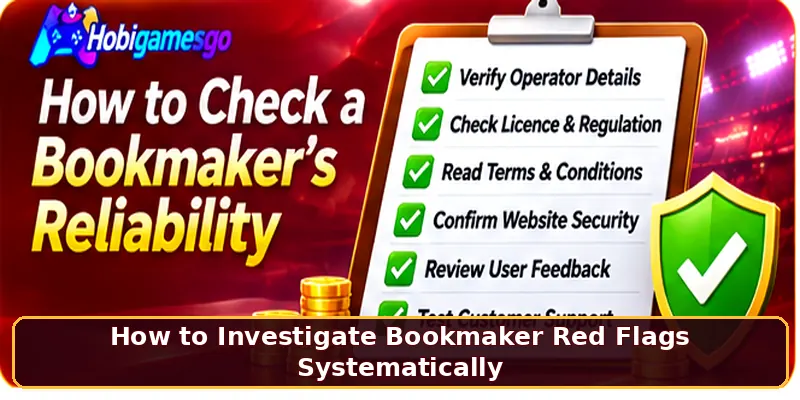
Step 1: Verify the Website’s Identity
Record the exact domain, operator name and published contact information.
Check whether these details are consistent across the website’s legal pages.
Look for unexplained differences between the claimed operator and the organization identified in regulatory records.
The absence of information does not automatically prove fraud, but it means the website has not supplied enough evidence to establish trust.
This is an important principle when researching bookmaker red flags.
Step 2: Examine Terms and Complaint Procedures
Read the relevant sections concerning accounts, payment restrictions, identification requirements and dispute resolution.
Unclear or contradictory terms make it difficult to understand a service’s obligations.
Investigate whether the operator identifies a meaningful complaint channel and explains how disputes are handled.
Repeated complaints may provide useful context, but anonymous reports should not be treated as conclusive evidence without corroboration.
A balanced bookmaker verification process weighs documented facts more heavily than unverified accusations.
Step 3: Record Security and Transparency Findings
A practical checklist helps prevent important details from being missed.
| Review area | Warning sign |
| Company identity | Missing or conflicting legal names |
| Licensing | Unverifiable regulatory claims |
| Domain | Imitation branding or unexplained redirects |
| Payments | Unexpected charges and unclear restrictions |
| Promotions | Guaranteed-profit claims or hidden conditions |
| Applications | Unverified APK sources or excessive permissions |
| Support | Requests for passwords or OTP codes |
| Complaints | Repeated unresolved issues with supporting evidence |
The strongest bookmaker red flags are those supported by independently verifiable discrepancies rather than assumptions based on appearance.
Step 4: Respond Safely to Suspicious Activity
If a website appears unsafe, avoid submitting additional personal information or transferring money.
If credentials have already been exposed, change affected passwords through trusted services and review associated accounts.
Where financial information may have been compromised, contact the relevant financial provider promptly.
Preserve useful evidence such as transaction references, messages and website addresses, while avoiding unnecessary disclosure of sensitive information.
For Indian readers, it is also essential to distinguish fraud prevention from legal eligibility. An overseas platform’s availability or claimed authorization does not establish permission to use real-money betting services under Indian law.
⭐ Frequently Asked Questions About Bookmaker Red Flags
What are the most common bookmaker red flags?
Common bookmaker red flags include unclear ownership, unverifiable licensing, imitation domains, suspicious payment requests and demands for account credentials.
Can fake betting sites use HTTPS?
Yes. HTTPS encrypts a connection but does not verify that the website’s operator is trustworthy.
Does a licensing logo prove a sportsbook is regulated?
No. The license must be checked against an official regulator’s records, including its holder, status and permitted activities.
Are all negative bookmaker reviews reliable?
No. Reviews vary in credibility. Investigate specific claims and prioritize evidence that can be independently checked.
What should I do if I shared an OTP with a suspicious website?
Secure the affected account immediately, contact the relevant provider and follow its account-recovery and fraud-reporting procedures.
⭐ Conclusion
Recognizing bookmaker red flags begins with a simple principle: trustworthy claims require verifiable evidence.
Professional graphics, impressive bonuses and familiar logos cannot substitute for clear ownership, authentic regulatory information and transparent account terms.
Hobigamesgo encourages readers to investigate fake betting sites, evaluate sportsbook warning signs and protect sensitive information before trusting unfamiliar platforms. An evidence-based approach provides stronger protection than relying on advertising or unsupported rankings.
